Source 780kg Mini Excavator with Backhoe Bucket for landscaping, construction, and trenching
Explore 30 listings for a 780kg Mini Excavator with Backhoe Bucket suitable for compact sites. Buyers can compare hydraulic transmission types, digging dimensions, and engine specifications from verified Chinese manufacturers.
Key considerations
Products List


Durable 1.8-Ton Mini Excavator with a 600mm Specially Made Tilt Bucket
$8360.00 - $8530.00
MOQ: 5 Pieces


Chinese Small Digger Cheap Mini Excavator Hydraulic Excavators with Bucket
$1758.00 - $3601.00
MOQ: 1 Pieces


1000kg Mini Small Backhoe Machine Digger Hydraulic Excavator for Sale
$2600.00 - $3000.00
MOQ: 1 Pieces


China Factory Hydraulic Mini Small Excavator 1.8 Ton with Bucket for Sale
$4664.00 - $7785.00
MOQ: 1 Pieces


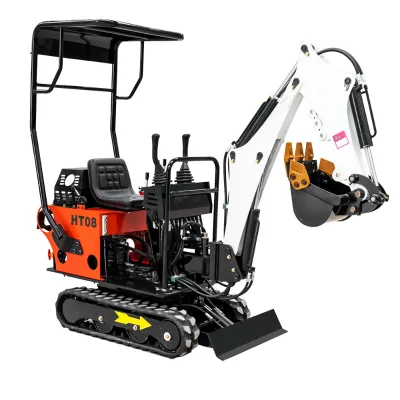


Mini Excavator with Stable Operation and Multifunctional Performance
$4751.00 - $5615.00
MOQ: 1 Pieces

China Construction Machinery Towable Backhoe/Mini Excavator 1.0ton 0.8ton
$2900.00 - $3800.00
MOQ: 1 Pieces


Comprehensive Sourcing Guide
Strategic Sourcing Guide for 780kg Mini Excavators with Backhoe Buckets
Procuring a 780kg mini excavator equipped with a backhoe bucket requires a disciplined approach that balances compact operational requirements with the versatility of a backhoe attachment. In the global B2B machinery market, this specific weight class represents a critical segment for urban construction, landscaping, and utility work where space is limited but digging depth and reach are essential. The following guide synthesizes available product data and industry standards to assist buyers in navigating the procurement landscape, ensuring that technical specifications align with project needs without relying on unverified claims.
Technical Specifications and Configuration Analysis
When evaluating a 780kg class machine, the primary technical differentiator is the configuration of the undercarriage and the attachment system. The observed market data indicates a diversity in transmission types, ranging from hydraulic-mechanical to full hydraulic transmission systems. Buyers must verify the specific transmission architecture of the unit they intend to purchase, as this directly impacts maintenance complexity and operational smoothness. For a machine of this weight, a hydraulic transmission is often preferred for its ability to provide precise control during delicate excavation tasks, whereas hydraulic-mechanical systems may offer cost advantages in heavy-duty, continuous operation scenarios.
The drive type is another critical specification. While the majority of mini excavators in this category utilize internal combustion drives, the presence of electric drive options in the market suggests a growing segment for indoor or environmentally sensitive applications. Buyers should confirm the engine brand and type, as observed data points to manufacturers like Yuchai offering water-cooled, supercharged engines with power outputs around 70kw for slightly larger models, though 780kg units typically feature lower power ratings. Fuel consumption ratios are a key efficiency metric; observed data suggests a minimum fuel consumption ratio of 230g/Kw.H for comparable models, which serves as a benchmark for evaluating the operational cost efficiency of a specific unit.
The bucket configuration is central to the "backhoe" requirement. While the core keyword specifies a backhoe bucket, product listings often show a variety of bucket types, including grab shovels and standard digging buckets. The backhoe function implies a specific linkage geometry that allows the machine to dig behind the tracks, a feature distinct from standard front-loading excavators. Buyers must ensure the machine is explicitly configured as a backhoe loader or a mini excavator with a rear-mounted backhoe attachment. The bucket capacity for this class typically ranges from 0.5 to 1.0 cubic meters for larger models, but for a 780kg unit, the bucket volume is likely significantly smaller, potentially around 0.025 cubic meters for the most compact variants. The overall operating weight of 8000kg observed in some data points refers to larger machines; a 780kg unit will have a drastically different weight profile, necessitating careful verification of the "Operating Weight" attribute to ensure it matches the 780kg target.
Compliance, Certification, and Safety Standards
Navigating the regulatory landscape is essential for international procurement. The supply chain data indicates that products from China, specifically originating from regions like Jiangsu and Linyi, Shandong, frequently carry CE and ISO9001 certifications. These are not merely marketing labels but critical indicators of compliance with European safety standards and quality management systems. The CE mark signifies that the machinery meets EU health, safety, and environmental protection requirements, which is often a prerequisite for importing into Europe and other markets that recognize CE standards.
Buyers must verify the specific version of the ISO certification. The observed data references ISO9001 with a condition of "New," implying that the manufacturer maintains a current quality management system. However, buyers should not assume that every listed product automatically satisfies these standards without requesting valid, up-to-date certificates. The emission standards are another area of scrutiny; observed data mentions Tier II compliance for certain models. For a 780kg mini excavator, emission regulations can vary significantly by region, with some markets requiring Tier 3 or Stage V compliance. Buyers must confirm the engine's emission rating against the regulations of the destination country to avoid customs clearance issues or operational bans.
Furthermore, the product standard attribute observed in the data includes specific dimensions (e.g., 591723503608mm), which likely refers to transport or operational dimensions for larger models. For a 780kg unit, the physical footprint will be much smaller, but the buyer should verify the exact dimensions to ensure the machine fits through site gates and into transport containers. The "Nude" packing option observed in some listings suggests that the machine may be shipped without a protective cabin or cover, requiring the buyer to assess the risk of damage during transit and the need for additional protective measures.
Cost Drivers and Pricing Dynamics
The pricing for 780kg mini excavators with backhoe buckets is influenced by several variables, including the engine brand, transmission type, and certification status. The observed price range in the market spans from $29 to $200,000, a vast disparity that reflects the difference between a small attachment, a complete machine, or a high-end customized unit. For a standard 780kg mini excavator, the price will likely fall in the lower to mid-range of this spectrum, but buyers must be wary of outliers that may indicate missing components or non-compliant units.
The Minimum Order Quantity (MOQ) is another cost driver. The observed data shows an MOQ range of 1 to 5 units. This flexibility is beneficial for small contractors or individual buyers who do not require fleet-level purchases. However, buyers should verify if the "Small Orders Accepted" attribute applies to the specific configuration they desire, as customization often increases the MOQ. Customization options, such as specific paint colors, extended undercarriages, or specialized bucket types, can significantly impact the final price. The "Service: OEM & Customized" attribute confirms that manufacturers are willing to tailor machines, but this service usually comes with a premium and potentially longer lead times.
Transportation and packaging costs also play a significant role in the total cost of ownership. The observed packing dimensions (e.g., 25509302195) and methods (RO-RO, Container) indicate that shipping logistics are a major consideration. A 780kg machine can often be shipped in a standard container, but the "Nude" packing option may require additional crating to prevent damage, adding to the overall cost. Buyers should calculate the landed cost, including freight, insurance, and customs duties, rather than focusing solely on the ex-works price.
Typical Applications and Operational Scenarios
The 780kg mini excavator with a backhoe bucket is designed for versatility in confined spaces. Its primary applications include urban infrastructure projects, residential landscaping, and utility trenching. The compact size allows it to operate in tight backyards, narrow alleyways, and indoor demolition sites where larger machinery cannot reach. The backhoe attachment adds significant value by enabling the machine to dig trenches behind the tracks, making it ideal for laying pipes, cables, and drainage systems.
The maximum digging depth and radius are critical performance metrics for these applications. Observed data for larger models shows a max digging depth of 4303mm and a max digging radius of 5393mm. For a 780kg unit, these figures will be lower, but buyers should verify the specific digging depth and radius to ensure the machine can reach the required trench depth for their specific project. The max dumping height, observed at 2693mm for larger models, is also relevant for loading trucks or moving material to a designated pile.
The "Application: Excavator" and "Type: Backhoe Loader" attributes in the data highlight the dual nature of these machines. While some units are dedicated excavators, others function as backhoe loaders, offering a front bucket for loading and a rear backhoe for digging. This versatility makes the 780kg class a popular choice for general contractors who need a single machine to handle multiple tasks. The "Small-Scale" specification confirms that these units are optimized for smaller projects, but their efficiency and maneuverability make them suitable for a wide range of construction activities.
Supplier Evaluation and Quality Assurance
Selecting a reliable supplier is paramount to ensuring the longevity and performance of the machinery. The observed data indicates that suppliers are located in China, with specific origins in Jiangsu and Linyi, Shandong. These regions are known for their manufacturing clusters, but buyers must conduct due diligence to identify reputable manufacturers. The "Video Factory Inspection: Yes" attribute is a valuable tool for remote evaluation, allowing buyers to verify the production capabilities and quality control processes of the supplier.
Quality control measures are another critical factor. The observed data mentions "ISO & 100% Inspection Before Shipment," which suggests a rigorous testing protocol. Buyers should request detailed quality control reports and inspection certificates to verify that each unit undergoes a comprehensive check before leaving the factory. The "Quality Control" attribute should be cross-referenced with the specific standards mentioned, such as CE and ISO9001, to ensure consistency.
The "Service: OEM & Customized" attribute indicates that suppliers are willing to work with buyers to meet specific requirements. However, buyers should evaluate the supplier's responsiveness and technical support capabilities. A supplier that offers customization but lacks adequate after-sales support can lead to significant operational downtime. The "Export Markets: Global" attribute suggests that the supplier has experience with international trade, which is a positive indicator of their ability to handle logistics and documentation.
Long-Term Procurement and Maintenance Considerations
Procuring a 780kg mini excavator is not just a one-time transaction but the beginning of a long-term operational relationship. Buyers should consider the availability of spare parts and the technical support network of the supplier. The "Engine Brand: Yuchai" and "Engine Type: Water-Cooled, Supercharged" details highlight the importance of engine reliability. Buyers should verify the availability of Yuchai parts in their region or ensure that the supplier can provide a comprehensive parts kit with the initial purchase.
Maintenance costs are another long-term consideration. The "Min. Fuel-Consume Ratio: 230g/Kw.H" provides a baseline for operational efficiency, but buyers should also consider the cost of routine maintenance, such as filter replacements, hydraulic fluid changes, and track repairs. The "Transmission Type: Power Shifting" and "Gears: Forward 4 Reverse 2" specifications indicate a complex transmission system that may require specialized maintenance. Buyers should ensure that the supplier provides detailed maintenance manuals and training for their operators.
Finally, the "Condition: New" attribute confirms that the machines are brand new, but buyers should be aware of the warranty terms and the duration of coverage. A robust warranty can mitigate the risks associated with early-life failures. The "Certification: CE, ISO9001" status should be maintained throughout the warranty period, and buyers should verify that the supplier offers ongoing support for certification compliance. By considering these long-term factors, buyers can make a more informed decision that ensures the 780kg mini excavator with a backhoe bucket remains a reliable asset for their operations.
Comparative Analysis of Key Attributes
To facilitate a clearer understanding of the variations in the market, the following table summarizes the key attributes observed in the product data. This comparison helps buyers identify the specific features that align with their procurement needs.
| Attribute | Observed Value/Range | Relevance to 780kg Unit |
|---|---|---|
| Drive Type | Internal Combustion, Electric Drive | Determines fuel vs. battery operation; critical for indoor use. |
| Transmission | Hydraulic-Mechanical, Hydraulic Transmission | Affects control precision and maintenance complexity. |
| Bucket Type | Grab Shovel, Backhoe | Essential for the "backhoe" requirement; verify rear attachment. |
| Certification | CE, ISO9001 | Mandatory for EU import and quality assurance. |
| Origin | China (Jiangsu, Shandong) | Indicates manufacturing hub; verify specific factory location. |
| MOQ | 1-5 Units | Flexible for small buyers; check for customization premiums. |
| Packing | Nude, RO-RO, Container | Impacts shipping costs and damage risk. |
| Engine | Yuchai, Water-Cooled, Supercharged | Brand and type affect reliability and parts availability. |
| Emission | Tier II | Must match local regulations; verify for specific model. |
| Weight | 1000 Kg (observed), 780kg (target) | Verify actual operating weight; 1000kg may be a larger model. |
This table serves as a reference point for buyers to cross-check the specifications of potential suppliers. It highlights the importance of verifying each attribute against the specific needs of the project, ensuring that the final selection is both technically sound and commercially viable. By adhering to these guidelines, buyers can navigate the complex landscape of 780kg mini excavator procurement with confidence and precision.
FAQs
What transmission types are available for this excavator?
Available transmission types include hydraulic-mechanical and hydraulic transmission systems. Buyers must verify the specific architecture of the unit they intend to purchase, as this directly impacts maintenance complexity and operational smoothness during delicate excavation tasks.
Which certifications do the machines typically hold?
Products frequently carry CE and ISO9001 certifications indicating compliance with European safety standards and quality management systems. Buyers should verify the specific version of the ISO certification and ensure certificates are current before finalizing any international procurement.
Can small orders be accepted for this equipment?
Small orders are accepted with a minimum order quantity ranging from 1 to 5 units. This flexibility benefits small contractors, though buyers should verify if the small order policy applies to specific customized configurations which may have different requirements.
Where are the manufacturers located for these units?
Manufacturers are located in China, specifically in regions like Jiangsu and Linyi, Shandong. These areas are known for manufacturing clusters, but buyers must conduct due diligence to identify reputable suppliers with verified production capabilities and quality control processes.
What is the typical bucket capacity for this class?
Bucket capacity for this class typically ranges from 0.5 to 1.0 cubic meters for larger models, while compact variants may have volumes around 0.025 cubic meters. Buyers must ensure the machine is explicitly configured with a backhoe attachment to meet specific digging requirements.
How is the packaging handled for shipment?
Packaging options include nude packing or container shipping with dimensions like 2550 by 930 by 2195 millimeters. Buyers should assess the risk of damage during transit for nude packing and calculate the total landed cost including freight and insurance.